Specialist Tips for Effective Chimney Maintenance You Need to Know
Chimneys offer as crucial components in many homes, giving heat and convenience. Guaranteeing their correct upkeep is usually overlooked until issues arise. Comprehending the complexities of chimney care can be the key to avoid costly repair work and securing your home and household. From the relevance of regular evaluations to safe operational techniques, a detailed approach to smokeshaft maintenance is important. Let's discover expert pointers that can aid you maintain your smokeshaft in optimum problem for several years ahead.
Importance of Normal Assessments
Routine inspections of smokeshafts are vital for ensuring their safety and security and performance. Chimneys play a crucial function in venting out harmful gases and keeping correct airflow in a home. Over time, creosote build-up, particles, and structural damages can take place within the smokeshaft, posing significant dangers such as chimney fires or carbon monoxide gas leaks.
During a chimney assessment, trained experts assess the condition of the smokeshaft, searching for any kind of signs of damage, clogs, or wear and tear. They additionally check the stability of the flue, chimney liner, and smokeshaft cap to guarantee every little thing is in appropriate working order. By recognizing and resolving problems early on, pricey repair work or potential threats can be prevented.
Normal assessments not only help in maintaining the safety of the smokeshaft yet also add to its general performance. A well-kept and tidy smokeshaft runs better, guaranteeing appropriate ventilation and minimizing the threat of interior air contamination. Therefore, scheduling annual chimney evaluations is a positive procedure that house owners can require to shield their home and liked ones.
Cleaning Techniques and Frequency
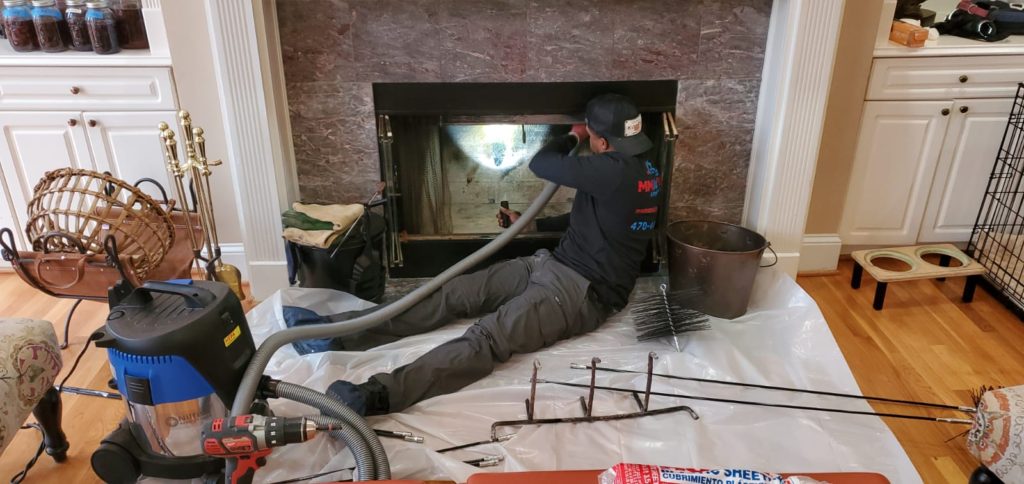
Keeping the safety and effectiveness of a chimney entails not only normal assessments however likewise executing suitable cleaning strategies and figuring out the ideal frequency for cleansing. Smokeshafts ought to be cleaned by a specialist chimney sweeper at least as soon as a year, also if they are not regularly used. Nonetheless, if the chimney is made use of regularly, particularly with wood-burning stoves or fire places, it might call for even more frequent cleanings to stop the build-up of creosote, an extremely flammable material that can bring about chimney fires.
Home owners should never ever disregard chimney cleaning, as it is essential for maintaining a useful and risk-free chimney system. Normal cleanings not only reduce the threat of smokeshaft fires however likewise improve the smokeshaft's overall performance and durability.
Addressing Smokeshaft Leaks
When resolving smokeshaft leaks, detailed inspection and timely repair work are essential to avoid water damage and preserve the structural integrity of the smokeshaft. Leaks in a smokeshaft can lead to serious concerns such as mold and mildew growth, damage of the chimney framework, and also potential fire threats. To efficiently attend to smokeshaft leakages, begin by examining the chimney cap, crown, blinking, and masonry for any type of indications of damage or wear.
Understanding Creosote Accumulation
To recognize the prospective risks of creosote build-up in smokeshafts, it is vital to recognize its development process and impact on smokeshaft efficiency. Creosote is a brown or black tar-like material that collects inside chimney systems when timber or fossil fuels are shed. As smoke rises with the chimney, it condenses and cools down, bring about the development of creosote, which follows the chimney wall surfaces.

Routine smokeshaft assessments and cleansings by an expert chimney sweeper are crucial in stopping creosote accumulation and ensuring the safe operation of your chimney system.
Safe Procedure Practices
Executing appropriate safety and security procedures is crucial for the effective and protected procedure of chimney systems. When using a fireplace or wood-burning cooktop, it is essential to follow certain security methods to avoid prospective dangers. Constantly guarantee that the smokeshaft is expertly inspected and cleaned consistently to eliminate any kind of creosote accumulation, which can lead to smokeshaft fires. Additionally, utilize a tough browse around this site screen or glass door in front of the fire place to avoid coal or triggers from creating a fire and escaping in your house. It is likewise essential to never overload the fireplace with excessive amounts of timber, as this can cause overheating and prospective architectural damage.
Additionally, see to it to just burn experienced timber in your fireplace, as environment-friendly or wet wood can generate even more creosote and trigger dangerous smokeshaft obstructions. Lastly, never leave a fire unattended and always ensure the fire is totally snuffed out before going to sleep or leaving the house. By complying with these safe operation techniques, you can delight in a cozy and warm fire while ensuring the safety of your home and loved ones.
Final Thought
In verdict, preserving your smokeshaft is vital for ensuring its security and efficiency. Normal examinations, appropriate cleansing strategies, resolving leakages, handling creosote build-up, and following secure operation methods are key aspects of smokeshaft maintenance.
Over time, creosote accumulation, debris, and structural damage can take place within the smokeshaft, presenting severe risks such as chimney fires or carbon monoxide leakages.
If the chimney is you can look here made use of frequently, particularly with wood-burning ovens or fireplaces, it may need even more constant cleanings to protect against the build-up of creosote, an extremely combustible compound that can lead to chimney fires. (Chimney Maintenance San Jose)
To understand the potential threats of creosote accumulation in smokeshafts, it is vital to acknowledge its development process and influence on chimney efficiency. As smoke climbs with the chimney, it cools and condenses, leading to the development of creosote, which sticks to the smokeshaft wall surfaces.
Constantly ensure that the chimney is skillfully examined and cleansed routinely to eliminate any creosote build-up, which can lead to smokeshaft fires.